Beauty
Controlling Skin Sheen Under Studio Strobes
Why balanced dermal hydration requires close technical alignment between the beauty team and the lighting setup.
Words by XAVIE MAXIMUS Editorial · 24 September 2026
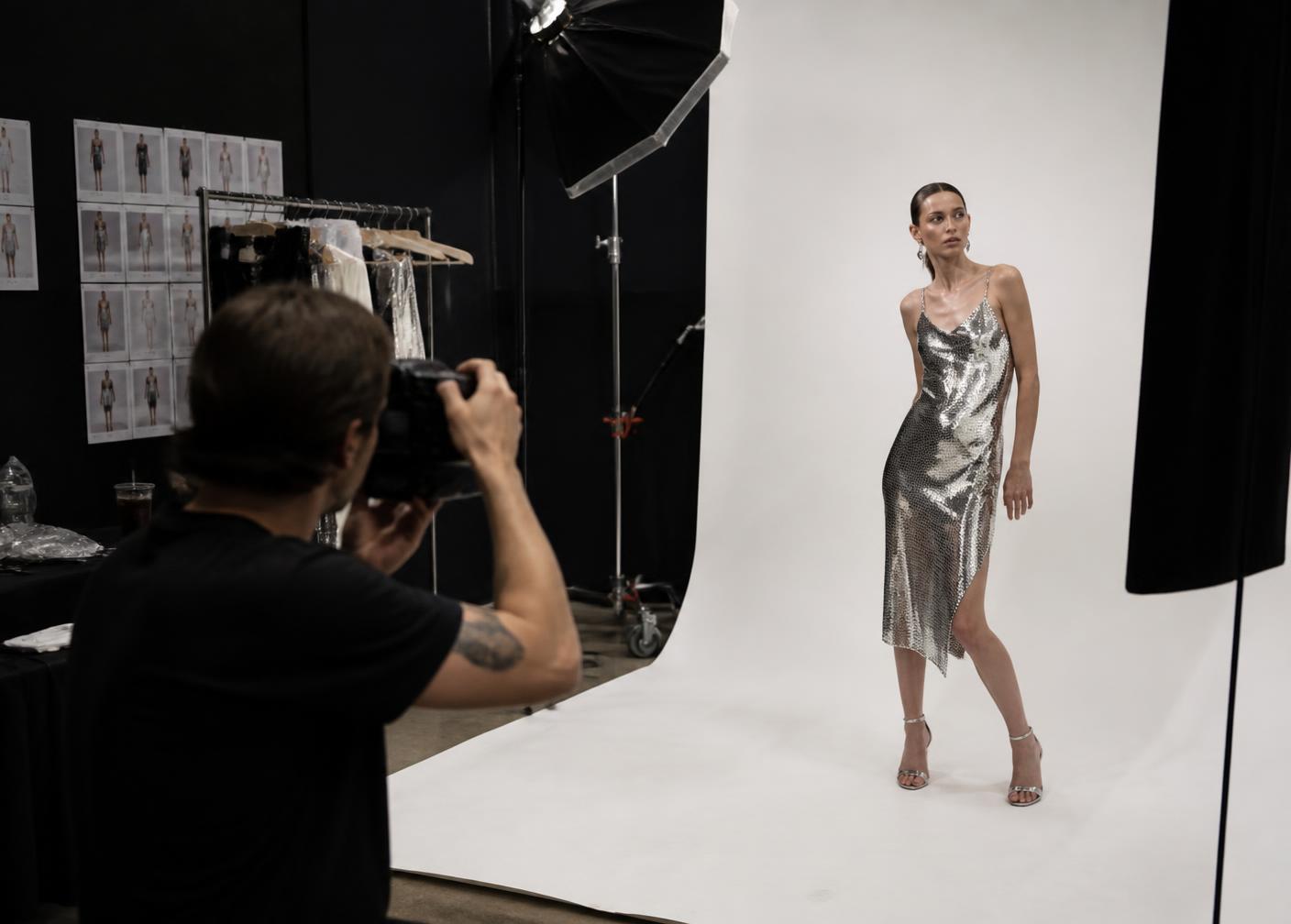
The tension between luminous skin and technical highlight clipping is constant on editorial sets. In contemporary fashion imagery, opaque matte foundations have largely yielded to transparent, hydrated skin that reveals natural dermal texture. However, what reads as supple dewiness under the ambient tungsten light of a makeup station often transforms into harsh specular reflection once positioned before high-powered flash tubes and silver modifiers. Resolving this discrepancy does not require flattening the entire complexion with heavy powder; it requires a systematic understanding of surface reflectivity and disciplined communication between beauty artists and camera operators.
The foundation of skin control begins in preparation rather than cosmetic coverage. Topical emollients with high oil content sit on top of the epidermis, creating an uninterrupted surface film that bounces light directly back into the lens as a hard flare. Lightweight humectants, absorbed thoroughly into the skin layers before any pigment touches the face, provide cellular plumping without leaving an oily residue. Allowing skincare to settle for ten to fifteen minutes before introducing base products prevents moisturizers from breaking down foundation formulas. When products destabilize on the skin surface, micro-pools of oil form, creating unpredictable reflection patterns that no camera profile can flatter. Addressing the barrier systematically, as outlined in our earlier notes on Skin First, ensures that luminosity stems from hydrated tissue rather than unabsorbed product.
Lighting geometry directly dictates where reflectivity is recorded on the face. A broad, heavily diffused key source softens transitions across the cheeks and forehead, distributing highlights over a wider surface area. In contrast, hard reflectors or bare parabolic dishes concentrate light into pinpoint hot spots that instantly expose excess surface moisture. Makeup artists should observe the lighting setup during preliminary test frames before committing to final powdering. If the lighting design relies on high-contrast modifiers or sharp directional bounce, such as techniques discussed in Using Negative Fill to Shape Available Light, skin sheen on the high points of the zygomatic arch and nasal bridge will register with extreme contrast against the shadow side.
Strategic powder placement remains the most reliable tool for managing camera-facing reflectivity without stripping dimension. Complete powdering drains vitality from the face, flattening bone structure on a two-dimensional sensor. Instead, artists should isolate the specific zones where highlight blowout actively degrades the image: the center of the forehead, the wings of the nostrils, the supraorbital ridge, and the center of the chin. By pressing a finely milled, translucent setting powder into these focal zones with a dense velour puff, the artist retains light absorption along the T-zone while leaving the perimeters, cheekbones, and collarbones open to natural sheen.
Working directly alongside the digital technician or photographer at the capture station eliminates guesswork. Checking a calibrated monitor on set—rather than assessing skin solely through a vanity mirror—reveals the exact clipping threshold of specular highlights. A blown highlight lacks color and tonal information; the camera sensor records it as pure white values that cannot be recovered in post-production without creating unnatural, desaturated patches. When reviewing initial test files, makeup artists can determine whether a shine point is a sculptural highlight that defines bone structure or an uncontrolled flare requiring immediate matting.
Mid-session maintenance should focus on blotting rather than continually layering powder over sebum. Layered powder absorbs oil temporarily, but within two look transitions it begins to cake and accentuate fine lines under medium or macro focal lengths. High-grade blotting paper lifts excess oil without disturbing the underlying pigment. Only after lifting surface sheen should micro-dosed powder be reintroduced where necessary. Coordinated pacing between beauty station touch-ups and look changes, detailed in Pacing Look Changes on an Editorial Shoot, keeps the talent comfortable while maintaining technical skin integrity.
Ultimately, controlling skin sheen is not an effort to eliminate texture or achieve artificial perfection. It is about understanding how light behaves when striking complex facial planes. When Creatives collaborate to balance the physics of strobes with the chemistry of cosmetic formulations, the result is an editorial image that feels alive, refined, and entirely intentional in raw capture.
Related Stories
All editorial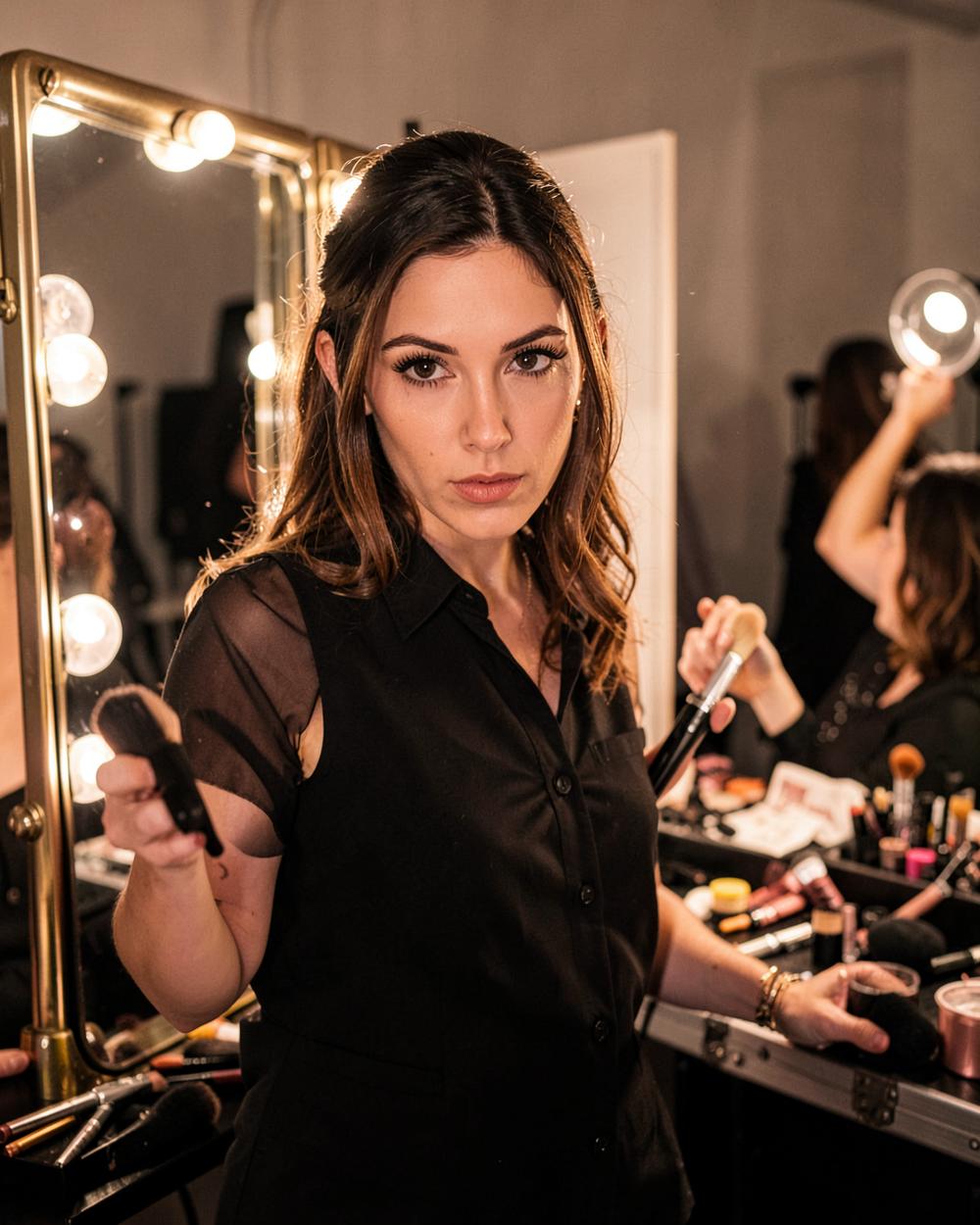
Beauty
Pacing Look Changes on an Editorial Shoot
How hair and makeup artists sequence look transitions to protect skin, preserve hair integrity, and keep production schedules moving.
Beauty
Skin First
The quietest beauty direction is the hardest to execute. What to decide before the first brush comes out.
Photography
Lens Choice and Garment Proportion in Editorial Work
A practical guide to choosing focal lengths for fashion editorials to preserve silhouette accuracy and control spatial compression.